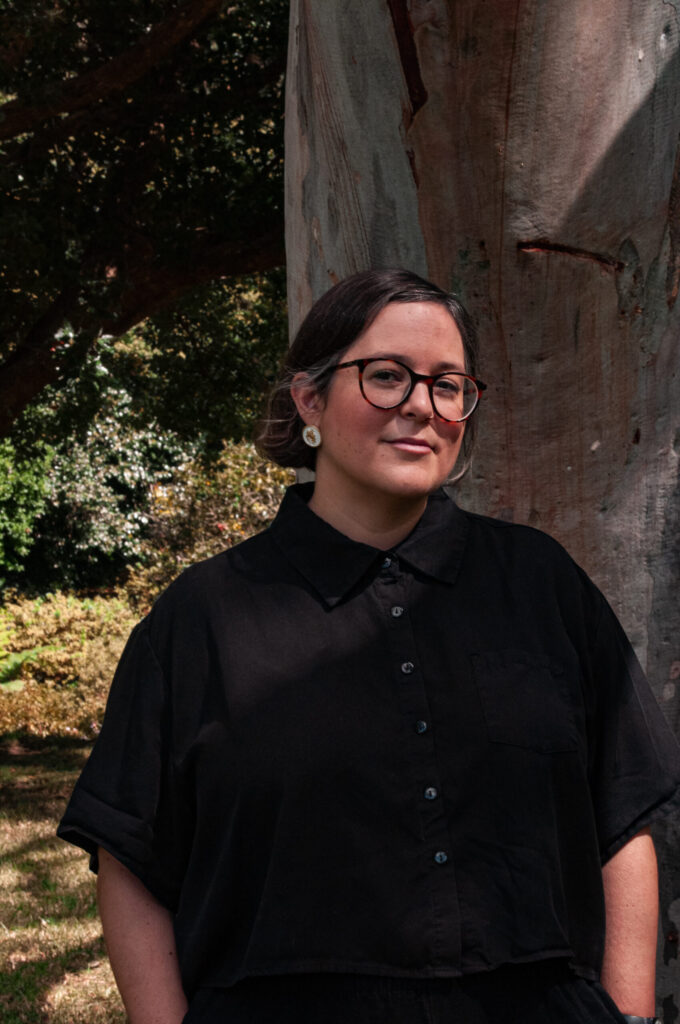
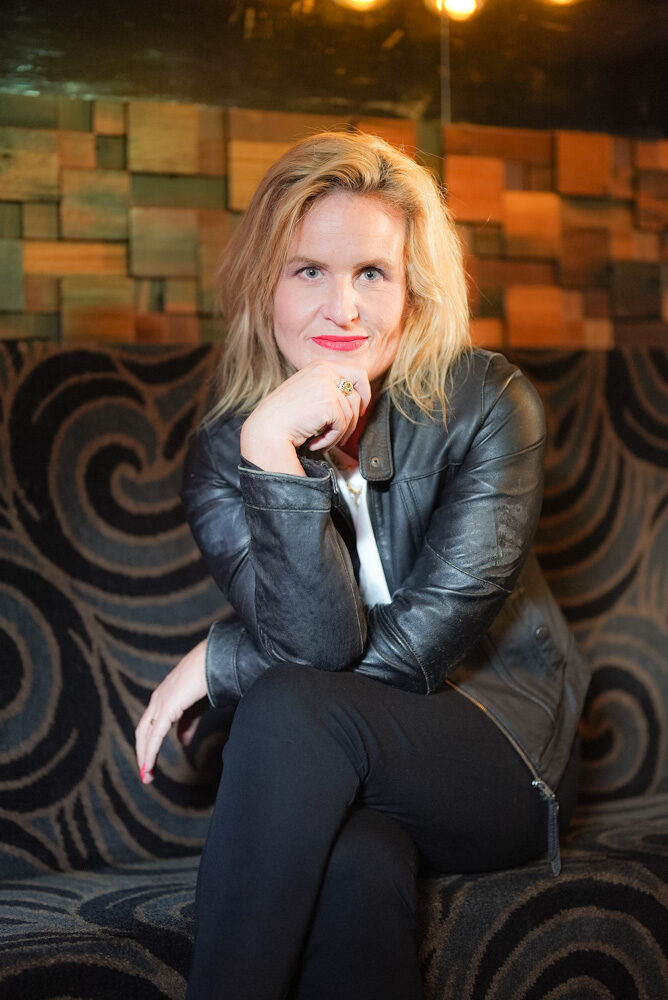
Hayley Scrivenor and Mandy Beaumont both hold PhDs in Creative Writing and have extensive experience in teaching and mentoring. Hayley Scrivenor is a former literary festival director and the internationally bestselling and award-winning author of Dirt Town. Hayley followed this with the acclaimed, Girl Falling. Mandy Beaumont’s debut novel The Furies was longlisted for the prestigious Stella Prize, shortlisted for the MUD Literary Prize and the Queensland Literary Awards Fiction Book of the Year. Her new true crime inspired novel, The Thrill of It, is out now. We’re delighted that they will be at the helm of our new course, Writing a Crime Novel and we asked them what we can expect.
FWA: You are both successful crime novelists. Did you always want to write crime fiction, or did you dabble in other genres first? If so, what won you over to crime in the end?
MB: Primarily I’m a writer of literary fiction, but strongly believe that by reading and writing in all the genres that you become a better writer. I wrote The Thrill of It, my true-crime inspired fiction book, because I love reading and watching crime and love exploring the darker side of humanity.
HS: I didn’t actually set out to write a crime novel, at first. For my first book, I thought I was writing a novel with a crime in it, but then I realised as I went along that if I was up to the challenge (and it is a challenge – I think crime is the most robust form of storytelling there is!) then it would deepen the story I wanted to tell. Ultimately, I became a crime writer because I wanted readers to tear through my books, to not be able to put them down.
FWA: You both approach crime writing with a strong interest in character and emotional depth. Why is humanity just as important as suspense in great crime fiction?
MB: I think that it really brings about what matters to us – it exposes our ethics, our morality and ultimately how we care for others.
HS: I think the best crime novels stay with you long after you have finished reading them, and character is a huge part of that. Fiction is unique in the access we can get to our fellow human beings, and the best novels help us both to see ourselves reflected and help us imagine what we might do when presented with the impossible. That might be what I love most about crime: it often presents an impossible choice.
FWA: In Writing a Crime Novel, students will spend a year immersed in crime writing alongside an intimate cohort of up to 11 peers. How important is a sense of writing community in helping writers finish a novel?
MB: You need to riff ideas, hear other people’s perspectives and learn other ways of seeing the world as a writer. Being part of a small yet committed group of crime writers is something I dreamt about when I started out writing years ago. I think its a brilliant opportunity to do the best work you can.
HS: I would never have finished a book if it wasn’t for other writers. From the PhD supervisor who worked with me on my first novel, through all the writing friends and, later, professionals who helped guide my book from a shaggy mess into something someone might want to read voluntarily – I would have been lost without all of them. To this day, I surround myself with people that let me nerd out about writing. You need people not just to tell you when your chapters are baggy or your similes are overbearing: you need them to believe in you, to hold the faith when that feels impossible.
FWA: Whole-class workshopping, group discussions and one-on-one consultations are central to the course experience. What can students expect from that feedback process, and how do you balance rigorous manuscript development with creating a supportive and encouraging writing environment?
MB: We are all in this together and the space we create will be one where nothing is wrong and everything can be discussed. Each week a student gets the opportunity to submit their work and we all get together and give feedback and ideas about how to make it better. It’s like an editing process but doing it together – and the editing process is one of the best ways to make your writing shine. I’m excited to do this and so keen to see how these stories develop from this.
HS: I think the best feedback helps bring your novel closer to your vision – not a homogenised one-size-fits-all version of your story, but the one only you can tell. Good feedback should reflect back to you what is working, and build from there.
FWA: Crime novels often rely on careful plotting and pacing. How do you help students balance structure with creativity as they develop their stories?
MB: Learning the rules of the genre is integral to writing good crime. But I’m also a big fan of breaking the rules (once you know them) in some way to make the world of crime writing anew. Creativity comes from experimentation and stepping outside our comfort zones or pushing back on the rules. So it’s great to work with students who want to develop their own voices in this way (even if in a slight way!).
HS: This is something I’m so excited to unpack with students. I used to think that structure would kind of just ‘happen’, if I kept working away at my novel. Now I know there are important questions you should ask, and when you need to ask them!
FWA: The readings and special guests span contemporary and classic crime fiction. Are there particular novels or writers you’re especially excited to discuss with your students?
MB: I’ll be asking students to read a lot and watch a lot of things throughout the course, and both Hayley and I will be asking students to read in full a contemporary novel (Lyn Yeowart’s The Silent Listener) and a classic crime novel (Raymond Chandler’s Farewell, My Lovely) as part of the course as we learn the masters and work towards new contemporary crime fiction.
And of course, we are thrilled to be joined by guest authors Ashley Kalagian Blunt and James McKenzie Watson. This is in addition to our impressive line-up of industry guests including Allen & Unwin publishing director, Cate Paterson, Ultimo Press publisher, Brigid Mullane, publisher at Hachette, Vanessa Radnidge, literary agent, Dan Pilkington, and acting coach, Amy Ingram.
HS: I am so excited about the readings for this course! We really have a depth and breadth of examples, and it’s been fascinating to see what different wells Mandy and I are drawing from. I’ll be asking students to read one full novel – The Silent Listener, by Lyn Yeowart, in addition to a range of shorter samples – so we have a shared touchstone novel we can talk about (with spoilers!) to go really in depth when talking about structure/narrative time/dialogue etc.
FWA: What will you be looking for when you assess applications for Writing a Crime Novel?
MB: I want to read the power on the page. An explosion of voice, tempo and ideas. Also confidence. I’m also after stories that subvert the old school crime narratives and maybe even shock me a bit! I want to read writing that feels like it knows where the story is going.
HS: I’m always on the lookout for queer crime fiction, and I love anything that plays with form or point of view – but mostly I just come back to wanting people to tell the story only they can tell. And it’s worth saying that might not feel glamourous to you – I know with my first book I didn’t even really want to write about the small town where I grew up, but when I wrote things set there, the prose started to move. It doesn’t need to be perfect (perfect doesn’t exist!), but I’m looking for writing I can get excited about, and where I can see an opportunity to push that person further in the direction of what is working. I feel honoured that Mandy and I will get to read what the next wave of Aussie crime writers are putting out there!
Writing a Crime Novel
with Mandy Beaumont and Hayley Scrivenor
ONLINE
28 July 2026 – 15 June 2027
Tuesday evenings, 6:30pm – 8:30pm (AEST/AEDT)