The course consists of 22 evening sessions (Tuesdays 6.30pm to 8.30pm AEDT) held at Rose Read Bookshop, Summer Hill, 6 full-day sessions (Saturdays 10.00am to 4.00pm) held on the terrace at Allen & Unwin, Crows Nest, and an additional evening session dedicated to the Faber Writing Anthology.
Session 1: Tuesday 16 February
Introduction
We begin by getting to know each other as writers and as a group: who we are, what we bring to the page, and what draws us to this course. We’ll talk through individual goals, obstacles and desires, and map out how the course will run.
Session 2: Tuesday 23 February
Voice
An exploration of voice at the macro level: how to listen for “the voice” of a piece of writing, and how different voices emerge across literature. We’ll look at how other writers conceive of voice, and practical strategies for finding your own voice again when you feel you’ve lost it.
Session 3: Saturday 27 February
Developing a writing practice
with guest author Emily Maguire
This session helps you find the essence of your novel and examine your process, whether you’re a planner or a “pantser.” We’ll discuss the balance of inspiration and perspiration, what it means to write “deep” and dream on the page, plus an introduction to workshopping.
Session 4: Tuesday 2 March
Point of view
Who is telling your story, and how? We’ll work through the mechanics and effects of first, second and third person narration, and explore the difference between close and distant points of view, helping you choose the perspective that best serves your novel.
Session 5: Tuesday 9 March
Research, ethics and appropriation
Writing fiction comes with freedoms, but also responsibilities. This week we’ll share how working novelists approach research, and consider the ethical questions that arise when drawing on real events, real communities, or real people’s lives in your fiction.
Session 6: Saturday 13 March
Writing place
with guest author TBC
Powerful settings are more than backdrops — they reveal character, theme and the emotional undercurrents of your novels. This session considers the “worlds” of our novels, whether grounded in real locations or entirely imagined, and how place can actively shape story.
Session 7: Tuesday 16 March
Detail and noticing
A close look at what to notice and how to take notes as a working creative writer. We’ll discuss using the outside world as inspiration, techniques for eavesdropping and observation, and how to identify the small, “telling” details that bring fiction to life.
Session 8: Tuesday 23 March
Form
Every novel has its own internal shape. This week, we step back from the sentence level to consider how a manuscript is built: through scenes, fragments, chapters, perspectives, patterns and gaps. We’ll explore how to recognise the form emerging from your material, and how structure can deepen both meaning and momentum.
EASTER AND ANZAC DAY BREAK
Session 9: Tuesday 27 April
The texture of sentences
An in-depth look at the craft underlying a single sentence. We’ll go beneath the surface to examine the shapes and sounds, the forms and contours, of the words you choose and how they combine to create rhythm and meaning.
Session 10: Tuesday 4 May
Handling time: scene and summary
How present is the past in your story, and how relevant? This session considers time from every angle, examining the difference between scene and summary, and giving you tools for moving fluidly backward and forward through your narrative timeline.
Session 11: Tuesday 11 May
Dialogue
Learn how to listen with real honesty to the way people actually speak, then translate that into dialogue that feels true on the page without sacrificing style, rhythm or narrative purpose. We’ll examine subtext, tension and pacing in conversation.
Session 12: Saturday 15 May
Character intensive
with guest author TBC
An intimate, in-depth look at character, where we ask some hard questions of ourselves and of the imagined people who populate our fiction. This intensive session digs into motivation, contradiction and the inner life that drives believable characters.
Session 13: Tuesday 18 May
The dramatic arc
This week, we’ll step back to consider the movement of your novel as a whole. By tracing its central desires, tensions and turning points, we’ll begin to map the dramatic arc that carries the reader from beginning to end.
Session 14: Tuesday 25 May
Colour, image and figurative language
This session zeroes in on how to write arresting figures of speech. We’ll explore practical techniques for bringing vibrancy, precision and vivacity to your prose without overwriting or losing clarity.
Session 15: Tuesday 1 June
The big picture
Before the long mid-year break, we pause to take stock of everyone’s progress. We’ll reflect on what’s been learned so far, where each novel currently stands, and what to focus on when we return.
COURSE BREAK
Session 16: Tuesday 20 July
Symbol, motif and theme
How does our use of figurative language build patterns across an entire manuscript? This session examines how symbols and motifs, repeated and developed, reveal and deepen theme, giving your novel resonance beyond its literal events.
Session 17: Tuesday 27 July
Design and pattern in narrative
There are more ways to structure a novel than the three-act structure or the classic dramatic arc. This week we consider alternative shapes — spirals, explosions, meanders and more — that might inform how you plot and design your narrative.
Session 18: Tuesday 3 August
Plots and subplots
How do you manage multiple storylines without losing control? We’ll discuss handling backstory, weaving subplots, dealing with plot holes, and using pace to slow down or speed up the reading experience as we consider cause and effect.
Session 19: Saturday 7 August
Editing intensive
with guest editor TBC
Meet a professional editor for a comprehensive breakdown of the editing process, from structural edits through to line-level polish. This intensive session offers practical, industry-informed guidance on preparing your manuscript for the next stage.
Session 20: Tuesday 10 August
Beginnings and Endings
What makes a beginning compelling; and an ending feel both surprising and inevitable? In this session we’ll explore beginnings & endings as part of the same architecture, how writers connect the two, and how a powerful ending can change our understanding of everything that came before it.
Session 21: Tuesday 17 August
Problem-solving
Every novelist gets stuck. This week we talk through the various strategies writers can draw on when a manuscript stalls, from structural fixes to changes in process, helping you build a toolkit for pushing through creative roadblocks.
Session 22: Tuesday 24 August
AI and other complications in the publishing landscape
Learn about the current state of play in the publishing industry, including the growing role of artificial intelligence, and what these shifts mean practically for your novel, your rights, and your path to publication.
Session 23: Saturday 28 August
Narrative drive
with guest author Ali Lowe
Guest author Ali Lowe joins us to explore narrative drive: the propulsive quality that keeps readers turning pages. We’ll discuss the techniques that create tension, momentum and page-turning urgency across genres and styles of fiction.
Session 24: Tuesday 31 August
Publishing trajectories
Hear directly from your tutor about their own journey to publication, including the setbacks and turning points along the way. This session is a candid reminder that no two publishing journeys look the same, and there’s no single right path.
Session 25: Tuesday 7 September
Synopsis, blurbs and pitches
Now we’re at the business end of the course. We’ll put our marketing hats on and work through how to package your book, covering how to write a compelling synopsis, blurb and pitch that capture its essence.
Session 26: Saturday 11 September
Presenting and promoting your work
with guest author George Kemp
Guest author, actor and Faber Writing Academy alumni George Kemp shares practical strategies for presenting and promoting your work, both before and after publication, covering everything from author platform-building to speaking confidently about your novel in public and professional settings.
Session 27: Tuesday 14 September
Literary agent
with guest agent Rebecca Slater, A4 Literary
Meet literary agent Rebecca Slater for an insider’s view of how agents assess new work. You’ll have the opportunity to test out your own pitch and receive live feedback on how it lands from an industry professional.
Session 28: Tuesday 21 September
Final readings
with guest publisher
The course culminates with a celebratory final session: read your work aloud to a publisher from Allen & Unwin over bubbles and snacks, marking the end of the course and, for many, the beginning of the next chapter.
Faber Writing Anthology sessions:
- Session 29: Meet the Anthology Editor
- Session 30: Meet the Faber UK Team
- Anthology Submission Date TBC
- Anthology Launch TBC
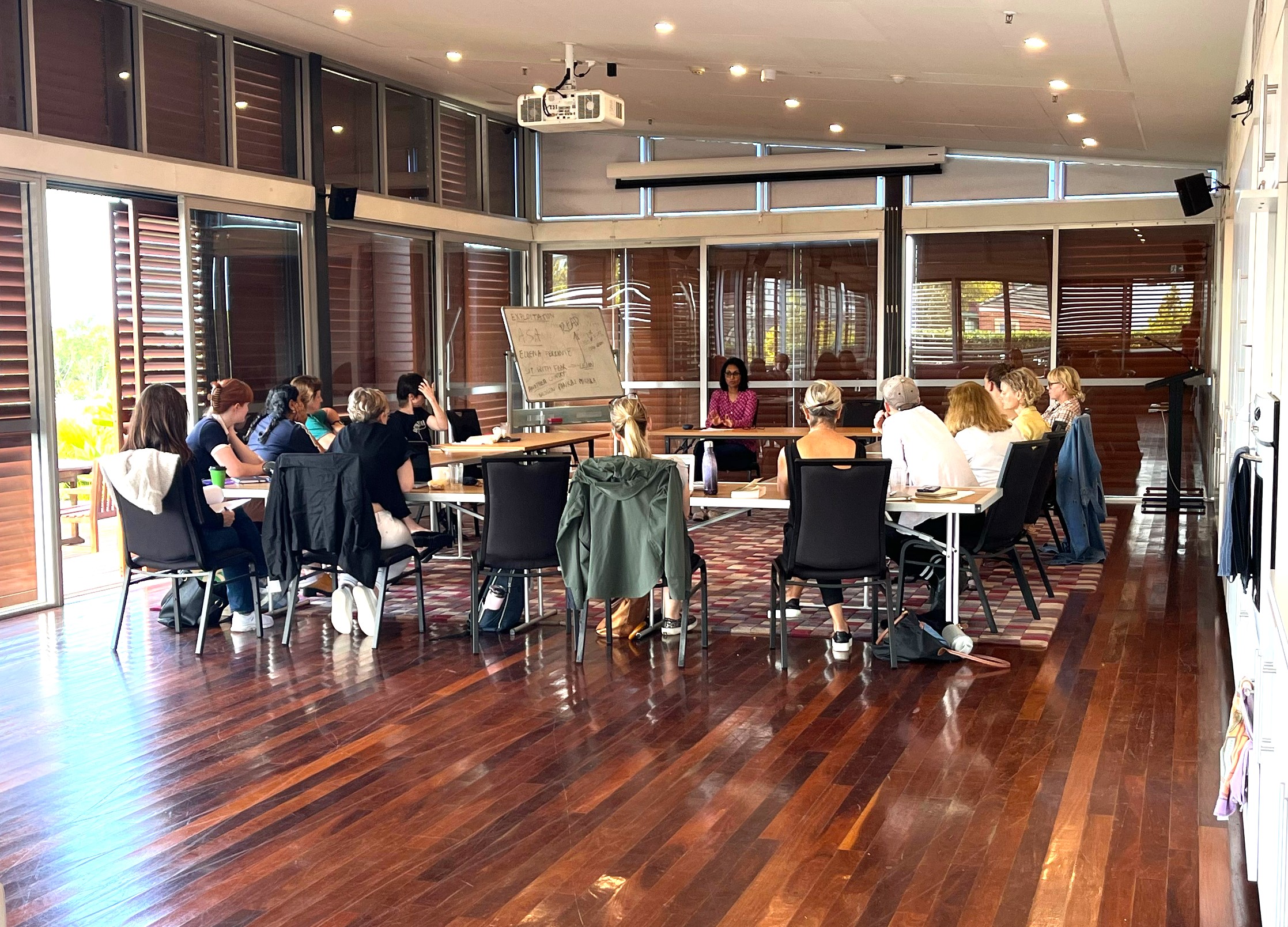
All Saturday sessions are held in person at the Allen & Unwin offices at 83 Alexander Street, Crows Nest, and are fully catered. Evening sessions are held at Rose Read Bookshop in Summer Hill.
The exact course content could be adjusted according to the experience and concerns of the group and availability of guest writers. The detail of the course is at the discretion of the Course Director and Faber Writing Academy at Allen & Unwin.