
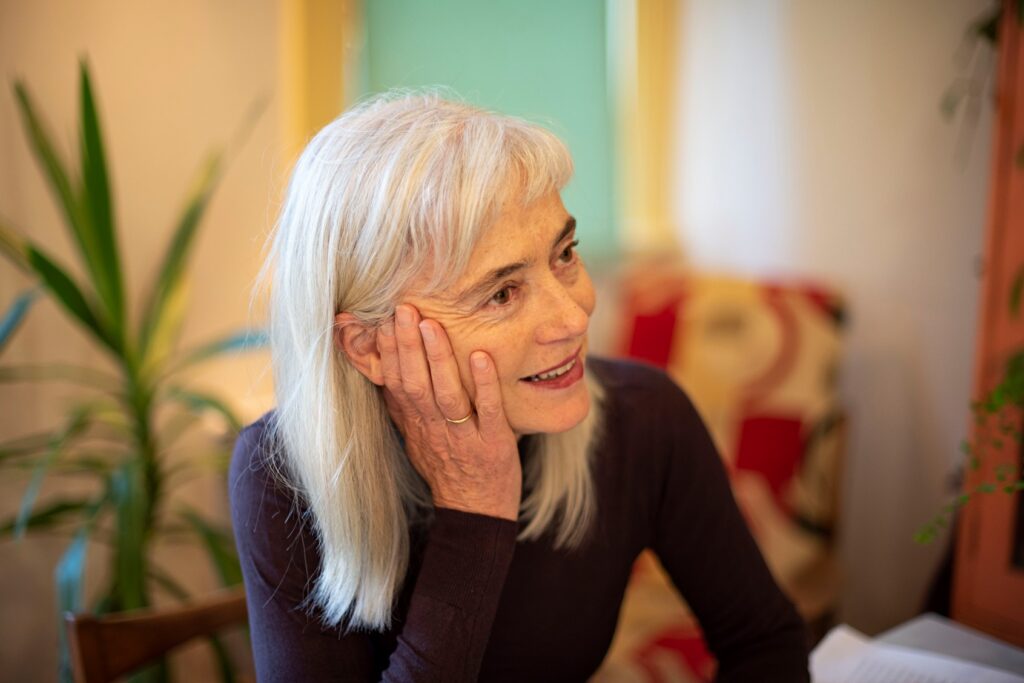
Sarah Day has written nine collections of poems. She was poetry editor of Island Magazine for seven years. She has taught creative writing courses for over thirty-five years, has collaborated with musicians, judged national poetry, fiction, and nature-writing competitions, and appeared at literary festivals across Australia and abroad. She is a multi-award winning poet and author. We’re thrilled Sarah is joining us for Writing a Poetry Collection, and we asked her what we can expect from this exciting new course.
FWA: As an award-winning poet and writer, we’re delighted to have you lead our inaugural Writing a Poetry Collection course. What are you most looking forward to in teaching this program?
SD: I’ve spent my life reading, writing, editing, and teaching poetry. I get to understand the world better by reading and writing poetry. There are lots of things I like about teaching, the rewards of seeing people’s progression in craft and stylistic ambition being the first. The means to achieving that progression lies primarily with closely guided reading of inspirational writing. For me, this means an indulgent opportunity to share some exceptional and beloved poetry with others. This program caters to a level of highly motivated writers with some publishing experience. I am full of anticipation for the dynamism that this group will generate as we make our way through the course.
FWA: You’ve published nine collections of poetry. How has your approach to writing poetry evolved over time?
SD: Over nine collections of poems my understanding of what I can achieve in a poem has broadened and deepened, conceptually and in craft. Some things though have remained consistent, my love of the acoustics of words and their effects, the way a poem sounds is as important to me as what it is saying – these two elements work alchemically together.
FWA: What distinguishes a poetry collection from a group of individual poems?
SD: A poetry collection has shape and form and intention. It is the author’s opportunity to lead a reader through their work from a beginning to an end point with deliberate emphases, foci, and connections along the way.
FWA: As a former poetry editor at Island Magazine, how did reading so many submissions shape your understanding of what makes a poem stand out?
SD: As with judging poetry, editing poetry is a privilege. Both roles give a unique view of society and a collective consciousness. Certain themes and preoccupations emerge at different times in response to an ever-changing world. Among the many that are submitted, the poems that surface to be published tend to have a distinctive voice and clear sense of why they have to be written. They carry themselves and the reader in the stream of their own energy and conviction. All sorts of things create that energy: the skill with which the line is used, word choice and sound, imagery, pace, momentum, form, cadence etc.
FWA: Towards the end of the program, students will have the opportunity to meet a member of the editorial staff at Faber & Faber, and ask questions about the publication process. We’re also excited to see the other industry guests you’ve invited to join you for Writing a Poetry Collection. Can you tell us about them?
SD: The poets who have been invited as guests are established authors with distinctive voices.
Claire Potter’s poems have an uncanny and compelling ability to lead you away from the dimension in which you think you have entered the poem, into something entirely different by the time you have reached the end. Somewhere between the beginning and the end something has shifted – mood, pace, imaginative compass bearing, subject plane – you think you are on one edge and then find yourself on another. Judy Beveridge has been a much loved and well-known poet, editor, and teacher for many years. A recipient of the Prime Minister’s Prize for Poetry, she has an outstanding gift and reputation. She is adept at poetic language, and observation – in microscopic detail – of the natural world, human and non-human. Ali Cobby Eckermann, in her words, is a proud Australian poet and a proud Aboriginal poet. Her work has been published and celebrated around the world. Her poems have the power to elevate and devastate. They embrace inseparable humanness and Country. Omar Sakr, who composes poems for the page and for performance is a dynamic voice in Australian poetry. What emerges in his work is a driving empathy, compassion, anger and the powerful expression of the need for social justice. As a poet, editor, and teacher, David Musgrave brings a wealth of experience to his role as publisher of one of Australia’s largest publishing houses, Puncher & Wattmann. He has supported and guided many poets in the first and following poetry collections. He has a wealth of knowledge on all matters relating to poetry and publishing in this country.
FWA: What kind of transformation do you hope participants will see in their work by the end of the program?
SD: I hope that participants, in engaging constructively with their colleagues, will relish the opportunity to think in new ways, to experiment, take risks, as well as refining their existing strengths. I’d like participants to witness the evolution of existing poems and to write poems they could never have imagined at the beginning of the course. Ultimately, I hope that most will complete the course with a much more consolidated sense of what they want their manuscript to say and why it will engage their readers. In other words, I hope by the end of the course they have a clear sense of the imaginative entity they have constructed or are in the process of constructing.
Writing a Poetry Collection
with Sarah Day
ONLINE
23 July 2026 – 27 May 2027
Thursday evenings, 6:30pm – 8:30pm (AEST/AEDT)